
CIRA CEO Calls for Trusted Infrastructure to Drive Africa’s New Development Era

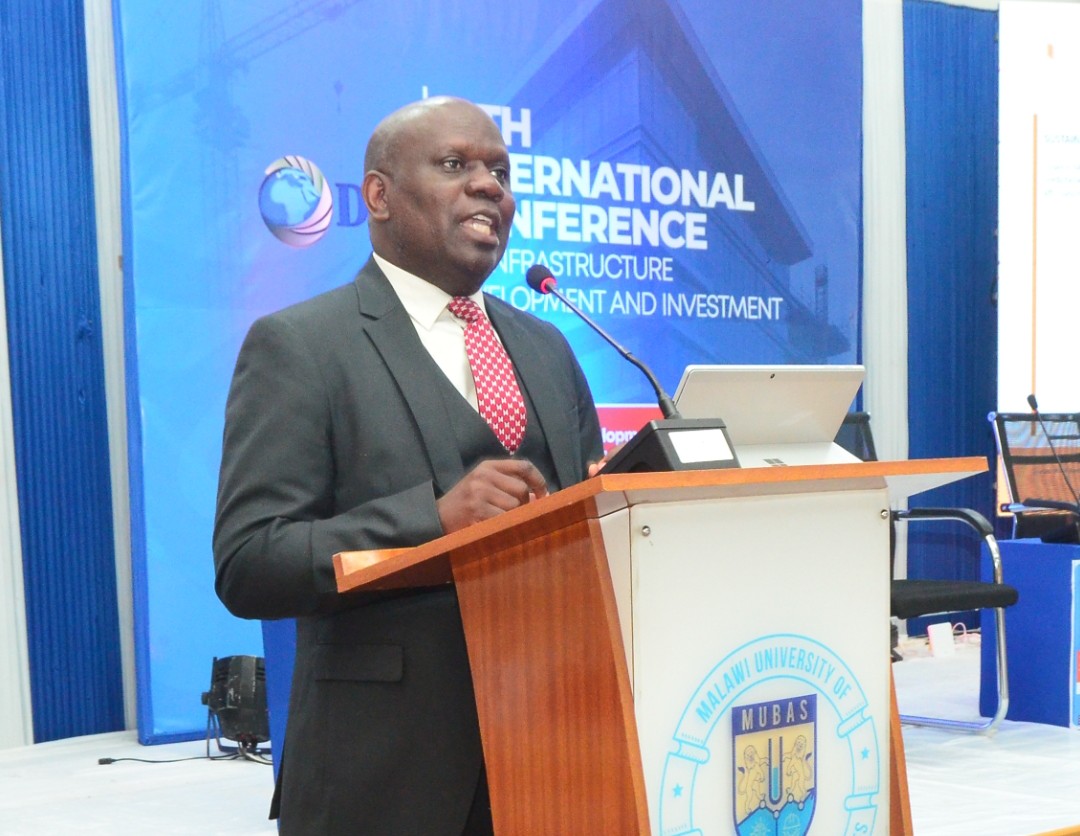
Construction Industry Regulatory Authority (CIRA) Chief Executive Officer, Eng. Gerald T. Khonje, has called for a fundamental shift in the way infrastructure is planned, delivered, and managed across Africa, emphasizing the need to build trusted infrastructure that creates long-term public value and supports sustainable development.
Eng. Khonje made the remarks on Wednesday the 12th of August 2026 in Blantyre while delivering a keynote address at the 12th International Conference on Development in Infrastructure and Investment (DII) in Africa, held at Sunbird Mount Soche Hotel in Blantyre. His presentation, titled “Building Trusted Infrastructure for Africa’s New Development Era: Governance, Innovation, Climate Resilience and Sustainable Investment,” challenged governments, regulators, investors, contractors, consultants, and academia to move beyond infrastructure quantity and focus on infrastructure quality, resilience, and accountability.
In his address, Eng. Khonje observed that Africa’s infrastructure challenges are often viewed through the lens of financing deficits. However, he argued that the continent’s infrastructure performance is equally constrained by weaknesses in governance, project preparation, professional capacity, maintenance, climate resilience, and institutional accountability. According to him, closing these gaps is critical to achieving lasting development outcomes.
He described trusted infrastructure as infrastructure that citizens can rely on, investors can have confidence in, professionals can be proud to deliver, regulators can verify, and future generations can inherit with confidence. He stressed that infrastructure should not be judged solely by its completion, but by its ability to provide reliable services throughout its entire lifecycle, from planning and design to operation, maintenance, renewal, and eventual disposal.
Drawing on Malawi’s development aspirations under Malawi 2063, Eng. Khonje noted that infrastructure serves as a critical enabler of agricultural transformation, industrialization, urbanization, and economic growth. He emphasized that the success of these national ambitions depends on infrastructure systems that are reliable, sustainable, and capable of supporting long-term socioeconomic transformation.
The CIRA CEO highlighted seven pillars that underpin trusted infrastructure: good governance and accountability, quality and professionalism, innovation and digital transformation, climate resilience, sustainable financing, capacity development, and strong regulatory institutions. He underscored the importance of transparent decision-making, evidence-based project selection, competent project teams, and robust oversight mechanisms in ensuring infrastructure delivers value for money and quality public services.
Recognizing the growing threat posed by climate change, Eng. Khonje further called for climate risks to be integrated into every stage of infrastructure development. He cited the impact of Cyclone Freddy as a reminder of the need for resilient infrastructure systems capable of withstanding increasingly frequent and severe climate-related events. He stressed that resilience should no longer be viewed as an optional consideration but as an essential component of sustainable infrastructure development
The keynote address also highlighted the importance of innovation and technology in transforming infrastructure delivery. Digital project registration, data analytics, geospatial technologies, remote sensing, and Building Information Modelling (BIM) were identified as tools that can strengthen transparency, improve decision-making, and enhance project performance when supported by sound governance systems.
A key feature of the presentation was the integration of the Malawi Infrastructure Delivery Management Standards (MIDMS) into what Eng. Khonje termed the Trusted Infrastructure Delivery Framework. He explained that MIDMS provides a disciplined, lifecycle approach to infrastructure development by ensuring that projects progress through clearly defined stages supported by evidence, accountability, and quality assurance.
The framework seeks to ensure that infrastructure projects are not only completed, but are bankable, climate-resilient, maintainable, and aligned with national development priorities. Under this approach, major project decisions must pass through governance, and evidence gateways before advancing to the next stage of implementation
Eng. Khonje also emphasized the critical role of universities, industry players, regulators, and development partners in building Africa’s infrastructure future. He called for stronger collaboration among these stakeholders to promote research, innovation, professional development, local capacity building, and knowledge transfer
As Malawi’s construction industry regulator, CIRA remains committed to advancing professionalism, improving compliance, strengthening project delivery systems, and promoting sustainable infrastructure development. Through initiatives such as MIDMS and enhanced regulatory oversight, the Authority continues to support the development of infrastructure that delivers lasting benefits to communities and contributes to national development aspirations.
Concluding his address, Eng. Khonje urged African leaders and infrastructure stakeholders to focus on building infrastructure that is not only delivered faster but delivered better. He emphasized that the ultimate measure of infrastructure success should be its reliability, resilience, service outcomes, and long-term value to society.
“Africa’s new development era should therefore be built not only faster, but wiser; not only for visibility, but for value; and not only for today, but for generations,” he said.